- Home
- Elite Housing Management
- Announcements
- Resident Information
- Neighborhood Information
- Recycling & Reminders
- KPHOA Event Calendar
- Parking
- Clubhouse
- Other Amenities
- Memorial Trees
- KP Memorial Tree List
- KP Pet Directory
- Handy Helpers
- Kelly's List
- Book Club
- Board
- About Us
- Covenants
- Neighborhood Watch
- Documents and Forms
Neighborhood Watch

Neighborhood Watch Mission Statement
The Neighborhood Watch Program was created by the residents of the Kelly
Plantation Neighborhood and serves as a sub-committee to the Kelly Plantation Homeowners Association. The purpose of the Kelly Plantation Neighborhood Watch Program is to obtain community involvement and build partnerships in preventing residential crime and improving neighborhood safety, to educate and distribute relevant safety and crime prevention information, and to promote good citizen-law enforcement relations and community pride.
See something suspicious?
First and foremost please report any suspicious sights to the Sheriff’s Department – 722-7181. Also email the board to let them know you have reported it. Posting on the Facebook page is an additional way to keep your neighbors informed but in addition to reporting to the Sheriff's Department, please also notify our watch chair Charles McCarthy at KPHOANeighborhoodWatch@gmail.com.
Membership
Open to all property owners in the Kelly Plantation community who are members in good standing of the Kelly Plantation Homeowners Association (KPHOA)
Funding
There are no dues or fees; expenses are covered by the KPHOA. Donations may be sent to the KPHOA requesting that they be used for the Neighborhood Watch program (for new signage).
Contact the Kelly Plantation Neighborhood Watch
Contact us at KellyplantationHOAboard@gmail.com
Duties of a Block Captain
The key person in any Neighborhood Watch group is the Block Captain. This person is an integral component to keeping the block actively involved in crime prevention efforts as well as the important process of information exchange between neighbors. Many Neighborhood Watch groups flourish, but some dwindle while others disappear totally. How successful they are depends on the Block Captain and the support they receive from their neighbors.
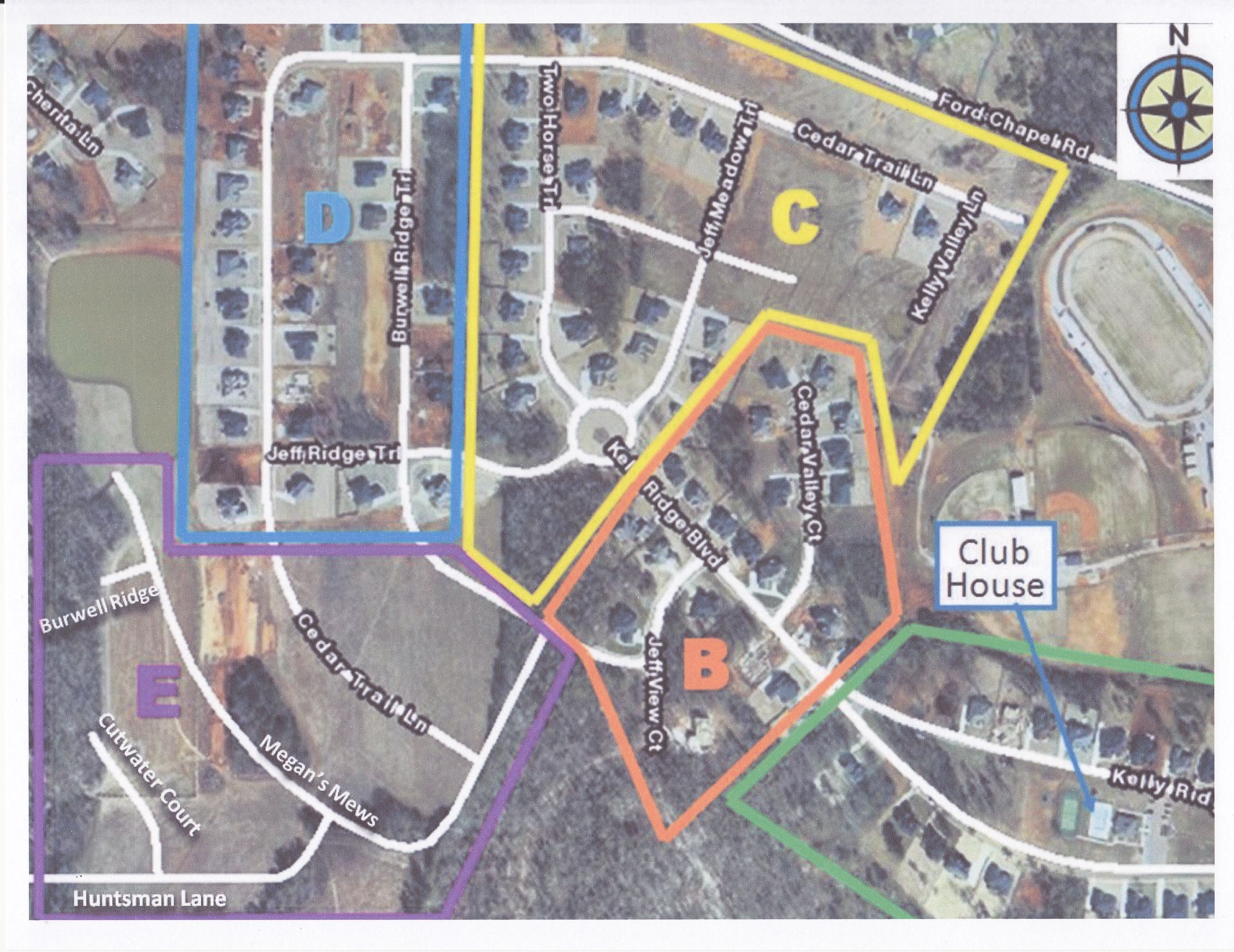
Block Captains should be designated for every 20 - 35 home sections, as defined in the Kelly Plantation Neighborhood Sector Map. The Block Captains should be directly involved with their immediate neighbors.
The block captain's responsibilities include:
Acting as a liaison between their block residents and the Neighborhood Watch Chairperson.
Establishing a "phone tree" by compiling and distributing a current list of names, addresses, and telephone numbers of their block participants. Forward current lists to the Neighborhood Watch Chairperson.
Visiting and inviting new residents to join the Neighborhood Watch Program; notifying them of meetings and training sessions.
Contacting each neighbor as often as possible to discuss possible crime problems, needs for assistance, and suggestions for program improvement.
Reach out to special populations including senior citizens, deaf and hard of hearing residents, those with Limited English Proficiency (LEP), the physically challenged and other people who may need additional assistance.
Notify the Neighborhood Watch Chairperson if no longer able to perform Block Captain Duties.
You are encouraged to arrange for your group to meet socially at least twice per year to exchange information and renew relationships as well as to get acquainted with new neighbors. People who communicate regularly will care more about each other and be more willing to keep an eye out for suspicious behavior. The annual National Night Out (NNO) celebration is one example that will bring your neighbors together.
Remember, your position as a Block Captain does not give you any law enforcement authority. You are simply the person who facilitates the unity of the group, distributes information, and coordinates activities. The job you are doing is important and appreciated by the law enforcement, but it carries no authority.